What “biodegradable” means on a sunscreen
On a sunscreen, “biodegradable” is the brand’s own environmental claim. The federal text that speaks to it is the FTC’s Green Guides: under 16 CFR 260.8, a brand making an unqualified biodegradable claim should have “competent and reliable scientific evidence” that the entire item will completely break down and return to nature within a reasonably short time after customary disposal. The FTC’s example of a liquid that meets this is a shampoo shown to decompose in the sewage system. The guide sets no lab test and no deadline for a liquid. It asks that a claim be qualified if the product wouldn’t break down where it normally ends up.
The Green Guides set out the FTC’s view of what counts as deceptive. Section 260.1 says they don’t bind the public, and in an enforcement case the FTC has to prove the claim deceptive under Section 5 of the FTC Act. Section 260.8 also says nothing about toxicity. A formula can break down on schedule and still contain a UV filter that Hawaii bans.
To a chemist the word has a narrower meaning. The OECD’s Test No. 301 gives microbes in water 28 days, and a substance passes as readily biodegradable when 60% of its carbon turns into carbon dioxide (or 70% of its dissolved organic carbon is removed) within a 10-day window. Zinc oxide and titanium dioxide contain no carbon, so a test that tracks carbon has nothing to measure in them. On a mineral sunscreen, a biodegradable claim can only be about the other ingredients.
What the FDA sunscreen rules say
The FDA’s sunscreen labeling rules don’t mention biodegradability. Neither 21 CFR 201.327 nor OTC monograph M020 (the version effective August 9, 2026) contains “biodegradable”, “reef” or any other environmental term. They set the wording for SPF, broad spectrum, water resistance and the warnings, and the examples they give of false or misleading claims are “sunblock”, “sweatproof” and “waterproof”, in a list that isn’t exhaustive. Nothing in either text says what a biodegradable claim has to show.
Why a biodegradable sunscreen can still be banned
The sunscreen laws we track check ingredients, and none of them asks whether a formula breaks down. Hawaii’s statewide law bans oxybenzone and octinoxate by name. Maui County, Hawaiʻi County and Palau allow only zinc oxide and titanium dioxide as active ingredients, and Palau also bans some preservatives. A fast-degrading formula made with homosalate and octisalate can be sold under the statewide law and still be illegal on Maui.
Of the 988 sunscreens we track, 523 are allowed under Hawaii’s statewide law but not in Maui County, because their chemical filters aren’t on the state’s list. Mineral actives don’t settle it either. 93 sunscreens with only zinc oxide or titanium dioxide as actives fail in Palau on an inactive ingredient such as phenoxyethanol or a paraben. “Biodegradable” on the front of the bottle tells you nothing about either list.
Compare every location’s rule →
Biodegradable sunscreen for Mexico
Mexico has no national ban on sunscreen ingredients. The rules travelers meet are in the management programs of federal marine parks run by CONANP, the national protected-areas commission, and they require “biodegradable” sunscreen without defining it.
The program for the Parque Nacional Costa Occidental de Isla Mujeres, Punta Cancún y Punta Nizuc, published in the Diario Oficial on August 2, 2016, lists “usar bronceadores o bloqueadores solares que no sean biodegradables” (using tanning lotions or sunscreens that aren’t biodegradable) among the activities not allowed in several of its subzones. In others, sunscreen is allowed if it is “exclusivamente biodegradables”. Regla 3 of the same program defines 19 terms, from tourist activities to visitors, and “biodegradable” isn’t one of them. No ingredient is named. Under Regla 60, violations are sanctioned under Mexico’s general environmental law (LGEEPA) and the federal penal code.
Other park programs use similar wording. The Huatulco National Park program prohibits non-biodegradable tanning lotions and sunscreens, and the Dzibilchantún National Park rules in Yucatán prohibit them while diving or swimming in Cenote Xlakán (Regla 20). CONANP’s visitor page for Huatulco goes further than the rule and recommends skipping sunscreen when swimming or snorkeling and wearing long sleeves. Eco-parks such as Xcaret and Xel-Há ask for biodegradable sunscreen too, and offer to swap your bottle for one of theirs at the entrance. That’s a company policy, with no government rule behind it.
With no ingredient list in the rules, there’s nothing to check a bottle against. On our Mexico marine parks page we treat a sunscreen whose only actives are zinc oxide and/or titanium dioxide as meeting the guidance: 388 of the 988 products we track do. That’s our reading of the rule, not a CONANP certification.
Is Neutrogena, Blue Lizard or Sun Bum sunscreen biodegradable?
We can’t say, and the label can’t either: no rule defines the word for sunscreen, and we don’t test how formulas break down. What we do check, from each product’s Drug Facts panel, is where it’s legal.
| Brand | Products checked | Pass every law we track | Allowed in Hawaii (statewide) | Mineral actives only |
|---|---|---|---|---|
| Neutrogena | 53 | 3 | 53 | 10 |
| Blue Lizard | 13 | 11 | 13 | 13 |
| Sun Bum | 45 | 11 | 45 | 16 |
Each brand page lists every product with its verdict for all 9 places that enforce a rule. For any other label, see all 42 brands.
How to tell if a sunscreen is biodegradable
You can’t tell from the label. A US Drug Facts panel lists ingredients, not test results, and a claim on the front doesn’t have to name the test behind it. If a brand makes the claim, ask which test it ran (an OECD 301 screen, for example) and whether the test covered the whole formula or a single ingredient.
For the rules that are enforced, the label is enough. Read the active ingredients, then the inactive list if Palau is on the itinerary, or paste the ingredient list into the checker and see where it’s allowed.
Sunscreens that pass every law we track
243 sunscreens we track are still sold, have a complete ingredient list, are legal in all 9 places with an enforced rule and meet the Mexico parks guidance as we read it. 104 of them are SPF 30 or higher, broad spectrum and 80-minute water resistant in a lotion, cream, tin or stick, and these 4 rank highest on the same label score as our best picks. The list rates legal status only, not biodegradability.
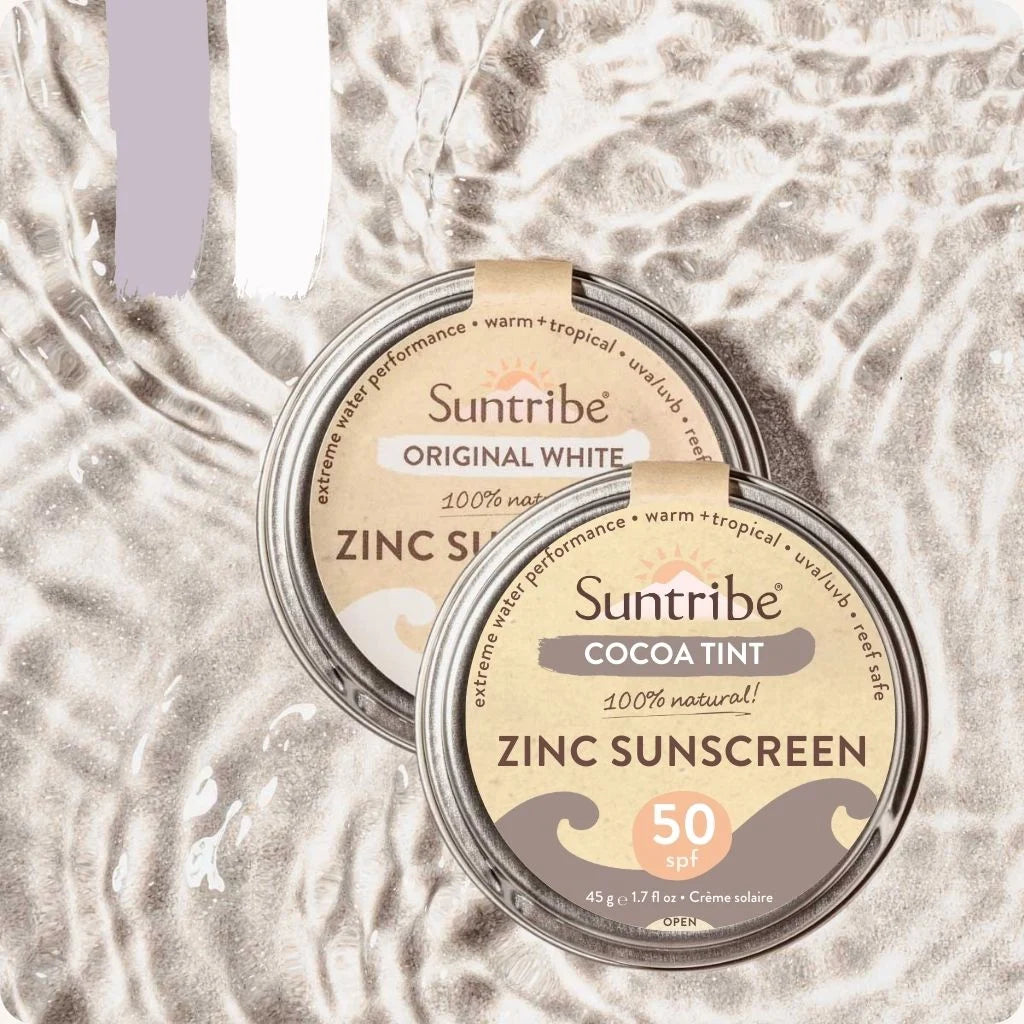
Organic Mineral Face & Sport Zinc Sunscreen SPF 50
SPF 50 · 80 min water resistant · no fragrance listed · non-nano

SPF 50 Sport Mineral Sunscreen Butter
SPF 50 · 80 min water resistant · no fragrance listed · non-nano

Baby + Kids SPF 30+ Tin
SPF 30 · 80 min water resistant · no fragrance listed · non-nano

Mini SPF 40 Sunscreen Tin
SPF 40 · 80 min water resistant · no fragrance listed · non-nano
Cruises and multi-stop trips
On a cruise, the rule that applies is the one at each port and marine park, and they differ. The US Virgin Islands ban oxybenzone, octinoxate and octocrylene, Aruba bans oxybenzone, and many of Mexico’s marine parks require biodegradable sunscreen. Hawaii itineraries that call at Kahului or Kona stop in the two counties that allow mineral actives only. 243 sunscreens we track are still sold, fully sourced and pass every enforced rule, so one bottle from that list covers the whole trip.
Common questions
Is mineral sunscreen biodegradable?
Zinc oxide and titanium dioxide are metal oxides with no carbon, so they don’t break down the way carbon-based ingredients do, and a biodegradable claim on a mineral sunscreen can only describe the rest of the formula. What mineral actives do guarantee is a pass on every active-ingredient rule we track, including Maui’s and the Big Island’s.
Is biodegradable sunscreen the same as reef safe?
No, and neither term has a legal definition for sunscreen. “Biodegradable” describes how a formula breaks down; “reef safe” is used for formulas that leave out certain ingredients. Neither tells you whether a sunscreen is legal in Hawaii or Palau. The Drug Facts panel does.
Do you need mineral sunscreen for Mexico?
No Mexican law requires it. Federal marine parks, including the one off Cancún and Isla Mujeres, allow only “biodegradable” sunscreen in the water and don’t define the word. We treat zinc oxide or titanium dioxide actives as meeting that guidance, which 388 of the 988 products we track do. That is our reading, not a CONANP certification.
What is the best biodegradable sunscreen?
We don’t rank sunscreens on biodegradability, because no rule defines it and the label doesn’t show it. The picks on this page pass every sunscreen law we track and are ranked on label facts: water resistance, SPF, broad spectrum, listed fragrance and a stated non-nano active.